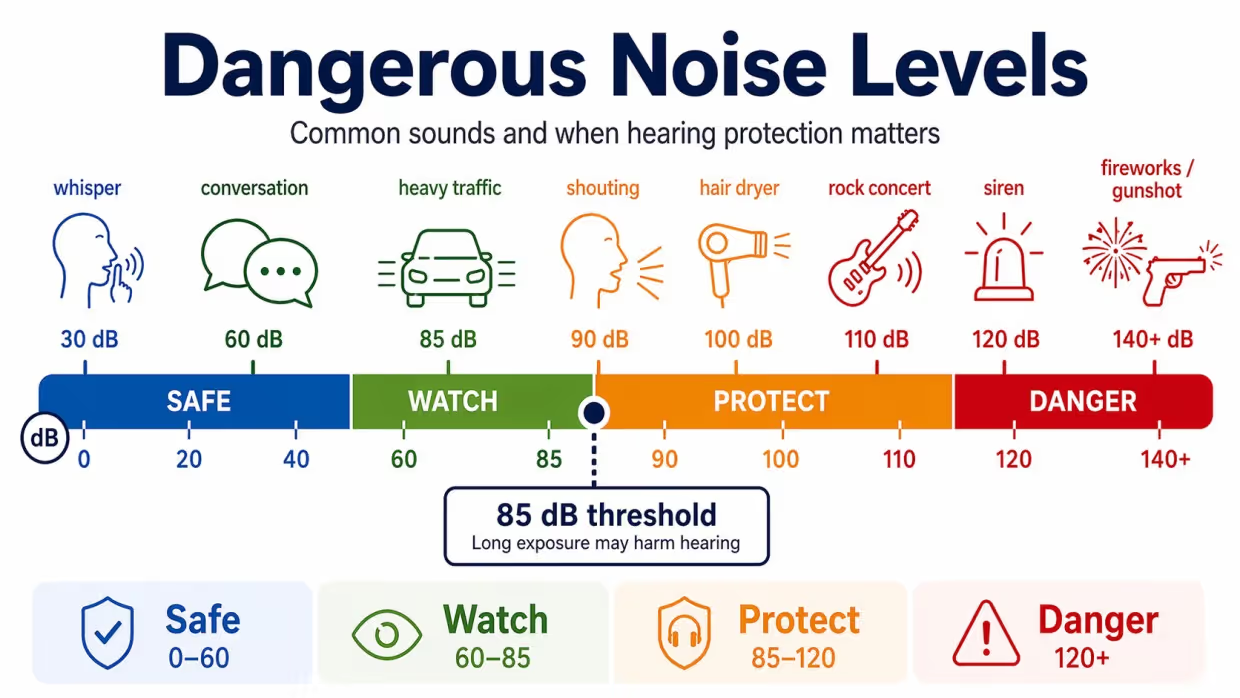
Most people wait until noise feels unbearable. For hearing, that is usually too late.
What matters most is not just how loud something sounds. It is how loud it is, and how long you stay in it.
A practical baseline for full-day average exposure.
Repeated exposure here can damage hearing over time.
Safe time drops to minutes, not hours.
Impulse noise can injure hearing quickly.
If you only need the quick version, use this:
If you need to raise your voice to speak to someone an arm’s length away, the environment is likely in the hazardous range.
That is often the first useful warning sign.
Your ears are telling you the dose was too high.
The goal is not to memorize every number. It is to see where everyday sound stops being ordinary and starts becoming risky.
Whisper, quiet room, conversation. Usually fine for hearing, though not always ideal for focus or sleep.
Busy public spaces and some appliances. Time starts to matter when this becomes a repeated daily exposure.
Traffic, tools, concerts, and max-volume listening. This is where hearing protection starts to make sense.
Sirens, fireworks, gunshots, and aircraft takeoff. Even short exposure can be enough to cause harm.
You do not need a sound to be extreme before it becomes risky. The real question is always how loud it is, and how long you stay in it.
| Noise level | What it means | Approximate safe time |
|---|---|---|
| 70 dBA | Low-risk baseline | Generally low risk over the day |
| 85 dBA | Protection threshold | 8 hours |
| 88 dBA | Only 3 dB louder | 4 hours |
| 91 dBA | Risk climbs faster than it sounds | 2 hours |
| 94 dBA | Clearly hazardous for long exposure | 1 hour |
| 97 dBA | Short exposure only | 30 minutes |
| 100 dBA | Very loud | 15 minutes |
| 103 dBA | Near the edge | 7.5 minutes |
| 106 dBA | Very easy to overdo | Less than 4 minutes |
| 109 dBA | Dangerous quickly | Less than 2 minutes |
If you must raise your voice at arm’s length, the sound is likely in the hazardous range.
The sound energy doubles.
The change is bigger than it looks.
Allowable exposure time is cut in half.
Concerts, workshops, power tools, and loud commuting can become hearing problems faster than people expect because short exposures still add up.
| Sound | Approximate level | What to take from it |
|---|---|---|
| Whisper | 30 dB | No hearing-damage concern. Useful as a quiet reference point. |
| Normal conversation | 60 dB | The best everyday reference for a normal sound environment. |
| Busy traffic | 85 dB | This is where hearing protection becomes reasonable for longer exposure. |
| Shouting nearby | 90 dB | Already loud enough that your daily dose can build quickly. |
| Hair dryer | 100 dB | A good reminder that familiar sound can still be risky. |
| Concerts, sports events, max-volume headphones | 94–110 dBA | Easy to underestimate because it feels normal until after exposure ends. |
| Sirens nearby | 110–120 dBA | Very short exposure can be enough to hurt hearing. |
| Fireworks or gunshots | 140+ dBA | Impulse noise. Treat this as immediate-risk sound, especially for children. |
If you came here looking for a specific number, here are the short answers.
Think light background sound at home. This is mainly a comfort question, not a hearing-damage question.
About normal conversation. This is the best everyday baseline for ordinary sound.
Still generally low risk for hearing, though it may feel tiring over long indoor exposure.
Loud enough that time starts to matter. Short exposure is usually fine; repeated exposure is less harmless than many people assume.
This is the number that matters most. Repeated exposure here can damage hearing over time.
Clearly loud. Protection becomes a much more sensible choice.
Very loud. Safe time is measured in minutes, not hours.
Concert or siren territory. Even a short exposure can be enough to cause harm.
Painful or near-painful for many people. This should not be treated as routine exposure.
Adults often treat 85 dBA as a clean safety line. For children, that is too simplistic. Noise exposure starts early, the effects are cumulative, and kids often depend on adults to notice the risk first.
Fireworks, concerts, stadiums, and even some travel situations can be too loud. If you cannot avoid the environment, use well-fitted earmuffs.
If a place feels too loud to an adult, it is probably too loud for a child. Covering ears, distress, or needing to shout nearby are good warning signs.
Fit and consistent wear matter more than buying the highest printed number with no regard for comfort.
If you control the source, lower the volume first.
Distance matters more than most people expect.
Above 85 dBA, exposure time becomes part of the risk.
If you cannot control the environment, wear earplugs or earmuffs.
Best for readers who want the why behind seal, cup design, and real-world noise reduction.
Best for visitors deciding which type of protection fits their situation better.
Best for families who need age-specific help for events, school, travel, and sensory use.
Best for workplace buyers who need task rules, rollout logic, and program structure.