Shooting ear protection
Low-profile cups for rifle and shotgun stock clearance, a stable seal around safety glasses and clear range commands come first.

SafeMuff supplies electronic hearing protection for range retail, hunting lines, PPE distributors and private-label orders. Each electronic earmuff has to reduce loud peaks, keep speech and range commands clear, fit the headgear already in use and carry accurate packaging claims for the target market.

A range counter order, a hunting retail line and a Bluetooth work-audio line need different samples. Before colour or packaging, SafeMuff confirms the target noise environment, the sounds that must remain audible, the headgear in use and the claim printed on the box.
Low-profile cups for rifle and shotgun stock clearance, a stable seal around safety glasses and clear range commands come first.
Weight, battery access and natural pass-through sound decide whether the product stays on for a long day in the field.
Bluetooth, FM radio or a 3.5 mm input helps when the user wants calls, radio or audio during long noise exposure.
Helmet clearance, cable path, PTT microphone and mounting hardware should be checked before the sample is approved.

Electronic ear protection is not just a speaker in a plastic shell. The cushion seal, cup volume and headband pressure still control most of the attenuation. The electronics add controlled pass-through sound, then reduce sudden peaks such as gunshots or nail-gun impact while the passive attenuation stays in place.
Microphones bring speech, range commands, field movement and workshop signals to a small speaker inside the cup.
When the microphone picks up a loud impulse, the circuit reduces gain quickly (typical reaction around 0.02 sec on listed models), then opens back up.
The sample must clear rifle stocks, glasses arms, cap brims and helmet slots before it fits the order.
A high NRR number matters, but it does not fix a broken seal. For shooting ear protection, the earmuff also has to clear the rifle stock, sit around safety glasses and stay comfortable enough to keep on through the session. Indoor ranges, enclosed lanes and frequent gunfire may still need earplugs worn under earmuffs.
Noise ratings only help when the earmuff seals correctly. For NRR, cup design and seal loss, see our earmuff noise reduction science reference. For work and leisure applications, see the electronic earmuff guide.
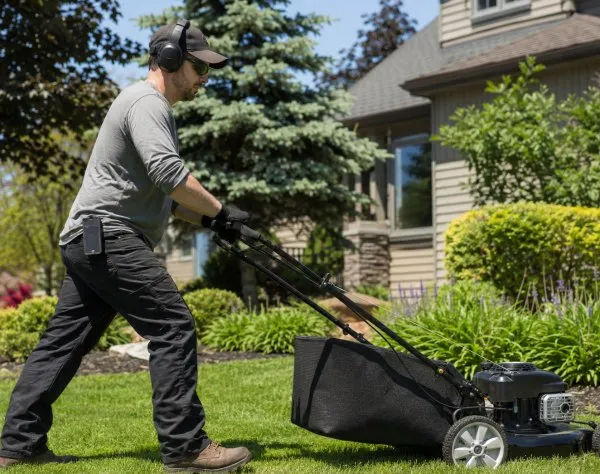
Mowing, woodworking, grinding and long workshop shifts create a different sound problem. The wearer needs protection, but may still need calls, radio, music or a machine signal without taking the earmuffs off. Bluetooth earmuffs, FM-radio builds and 3.5 mm input models cover those orders.
For calls and audio across long noise-exposure tasks where phone access matters.
For landscaping crews, shop floors and long shifts without phone pairing.
For radios, scanners and audio devices on selected electronic models.
SafeMuff supplies more electronic earmuff styles than the 5 shown here. The models below cover low-profile shooting, Bluetooth retail, headband, PTT communication and helmet-mounted use. Final rating, battery option, certificate record and label details are confirmed before production.
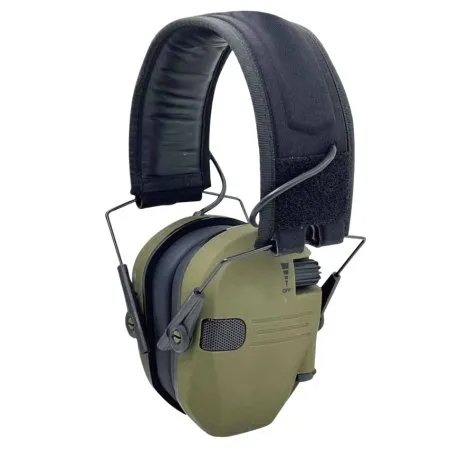
Slim cups built for rifle and shotgun stock clearance, with twin omni microphones for range commands.
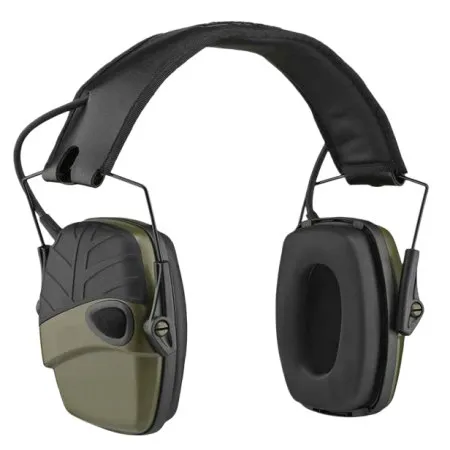
Step-up rating in the same low-profile shell — fits retail lines that want a stronger spec on the box.
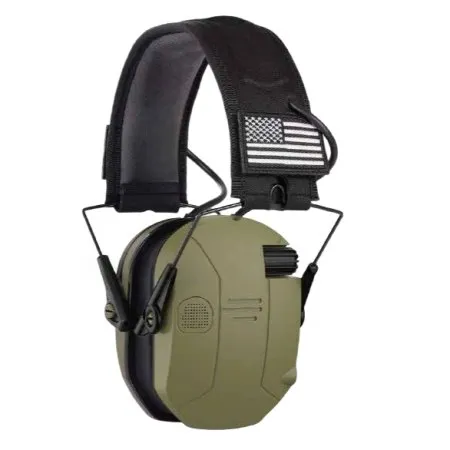
Bluetooth control with touch-area pairing — suits range counter retail and consumer-facing colour lines.
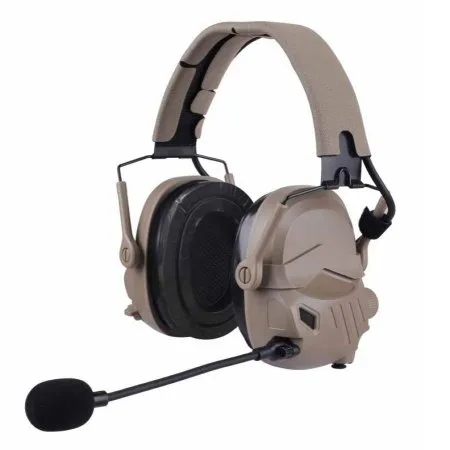
Detachable boom microphone on either side, built for tactical training, team comms and helmet-paired orders.
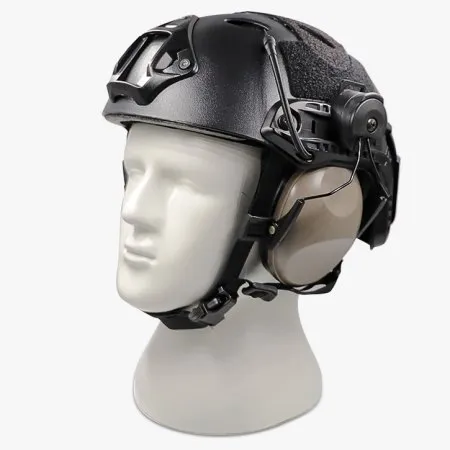
Slot arms that clip into common tactical helmet rails — used by training teams and crews already in head protection.
Over-ear electronic muffs fit orders that need speech, range commands, Bluetooth, FM or field awareness. Passive earmuffs fit straightforward worksite noise. In-ear electronic protection can work for specialist users, but is harder to brand and support in bulk. Our earmuffs vs earplugs article covers the broader difference.
The fit for orders that need speech clarity, range commands, Bluetooth, FM or field awareness in a single over-ear unit.
Simpler and lower-cost for general worksite noise where microphones and batteries are not needed — see our safety earmuffs.
Useful for some specialist users, but harder to brand, fit and support in bulk retail or private-label lines.
For range retail, hunting brands, PPE distributors and tactical resellers, SafeMuff keeps the second order behaving like the first.
As the electronic earmuff manufacturer, SafeMuff molds the cups, builds the electronics and runs the audio bench check under one roof. Bluetooth version, microphone gain, battery type and packaging remain tied to the approved sample across reorders.

PCB, microphone module and speaker matched to the approved sample, not swapped between batches.
Bluetooth pairing, mic gain and battery life sampled per production batch before shipment.
Since 2021, with a dedicated electronic-line workflow on 4,000 m²+ of production space.
ISO 9001 / 14001, BSCI, SGS. CE EN 352 and ANSI S3.19 documents are available with the confirmed spec.
Electronic earmuffs need more than a colour choice — Bluetooth pairing, microphone gain and battery life all show up at the sample stage. SafeMuff starts most electronic earmuff orders with a small sample set, locks the audio behaviour, then moves the order into a branded or private-label run. Custom electronic earmuffs start at an MOQ of 500 pieces per model.
1 to 5 pieces to verify fit, Bluetooth pairing, microphone behaviour and packaging fit.
An unbranded run for a range counter pilot, a single event or a marketplace listing test.
Your colour, logo and packaging — and the audio build (Bluetooth, FM, AUX, PTT) confirmed against the sample — from 500 pieces per model.
Retail packaging, carton, barcode, manual language and the approved electronics locked for repeat supply.
Custom MOQ is 500 pieces per model, and you can sample before committing. Before production, SafeMuff confirms the rating, battery, audio function, certificate record, logo position, manual language and packaging for the exact model. Standard production is about 25 days after sample approval.
Electronic ear muffs are not the right answer for every order. For passive industrial PPE, use Safety Earmuffs. For helmet slots, use Helmet-Mounted Earmuffs. Certification & Standards explains EN 352, ANSI and NRR for procurement checks.
Share the market, noise environment, required audio features (Bluetooth, FM, 3.5 mm or PTT), target rating and rough quantity. SafeMuff will prepare the sample set and product documents before branding or private-label production.