Oops! Something went wrong while submitting the form.

Taking your child to their first big game is a milestone. The roar of the crowd, the chants, the buzzer beaters—it’s electric.
But there’s a hidden side to that excitement: modern stadiums are designed to get loud. In fact, the loudest crowd roar recorded at a sports stadium (Kansas City’s Arrowhead Stadium) reached 142.2 dB—a level that can be physically damaging, especially for children.
This guide isn’t here to scare you away from sports. It’s here to give you a smart, practical plan—so your family can keep the memories, not the ringing ears.
If you’re bringing a child to a loud sports event:
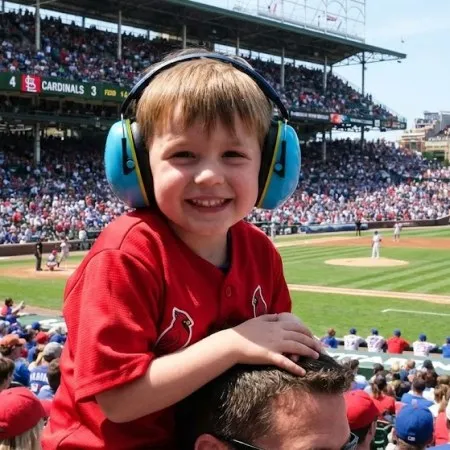
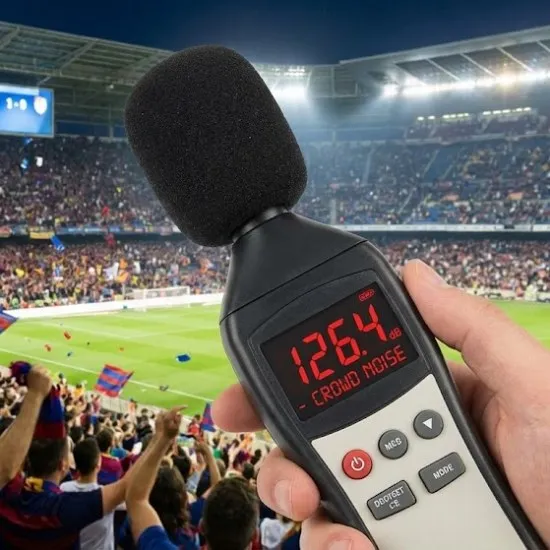
Many parents assume: “If it doesn’t bother me, it won’t bother my child.” Unfortunately, biology disagrees.
Your ear canal is like a tiny tube. In acoustics, tube length changes which frequencies get amplified—like a small flute versus a big tuba.
Why it matters: stadium noise is packed with high-frequency spikes—whistles, buzzers, screeching chants, sharp PA bursts. In simple terms, your child’s ears can “turn up the volume” on the most damaging parts of the sound.
Hearing damage isn’t always “I can’t hear quiet sounds anymore.”
There’s a modern concept called Hidden Hearing Loss, linked to cochlear synaptopathy—where loud noise damages the connection between the ear and the brain before obvious hearing loss shows up.
What it can look like later:
That’s why prevention is the smartest strategy.
Not all sports are loud in the same way. The “shape” of the noise matters.
Here’s the simplest way to understand noise exposure:
Every +3 dB increase cuts safe listening time in half.
NIOSH uses 85 dBA for 8 hours as a key reference point, and the “exchange rate” concept explains why time matters just as much as loudness.
Even if the average noise feels tolerable, the peaks pile up fast—especially in indoor arenas.
Try speaking to your child at arm’s length.
If you need to raise your voice, the environment is likely hazardous. Protection goes on.
For most kids at sports events:
Easy to put on, hard to insert incorrectly, easy to remove for breaks.
Not ideal for toddlers (insertion errors, comfort issues, choking risk if removed and played with).
Active noise cancelling helps with some low-frequency hum, but it’s not the same as certified hearing protection.
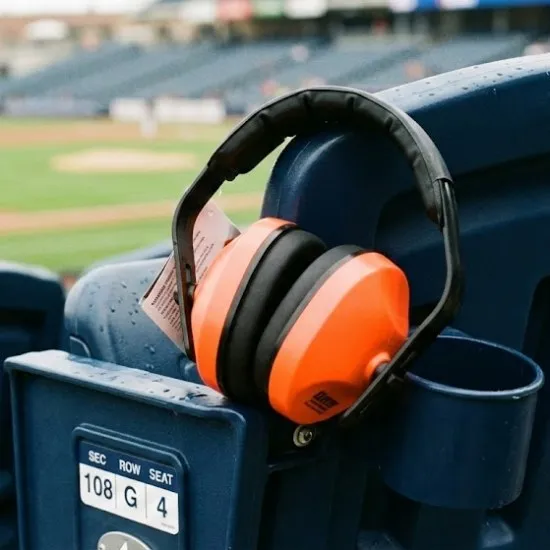
NRR is tested in a lab. Real life is messier—kids move, talk, snack, sweat, wiggle.
A conservative real-world estimate many safety programs use is:
Real-world protection ≈ (NRR − 7) ÷ 2
Example:
So if the stadium hits 105 dB, protection might bring it down to about 95 dB—better, but still not “infinite safe.”
For kids, the #1 performance factor is FIT:
This is one of the most overlooked mistakes.
If your child wears sunglasses or prescription glasses, the arms can break the earmuff seal and create sound leaks.

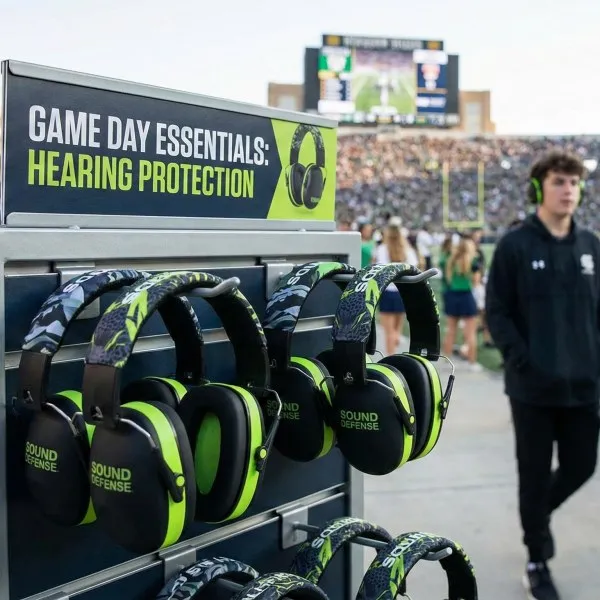
Priorities:
Parent reality:
This is the sweet spot for good compliance—if the fit is right.
Focus on:
Teens often prefer:
Tip: You can frame it as “performance gear” the way athletes wear protective equipment.
Sometimes the problem isn’t just loud noise. It’s sensory overload:
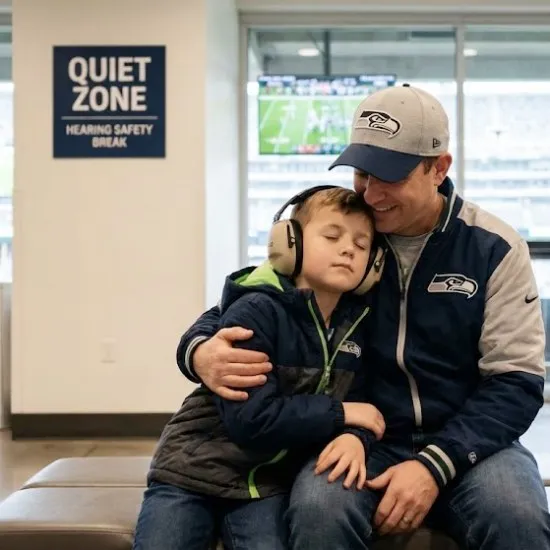
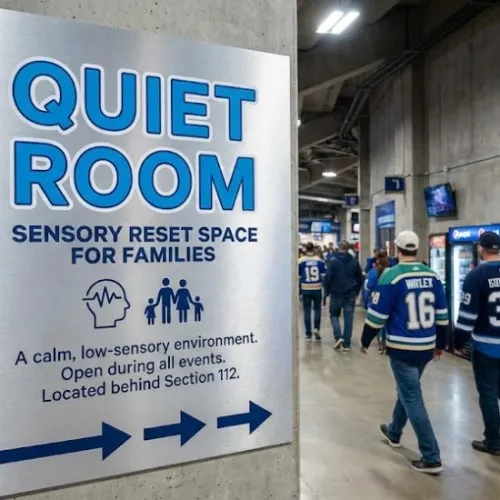
Many venues now support sensory inclusion, often through programs like KultureCity. If your child melts down:
These kits may include:
Pro tip: Check the KultureCity app or venue accessibility page before you go, and identify the quiet space in advance.
Try to avoid:
Every quarter/period/inning:
Your goal is simple: give the ears short recovery windows.
Leave the main seating area if your child:
A short reset can save the entire outing.
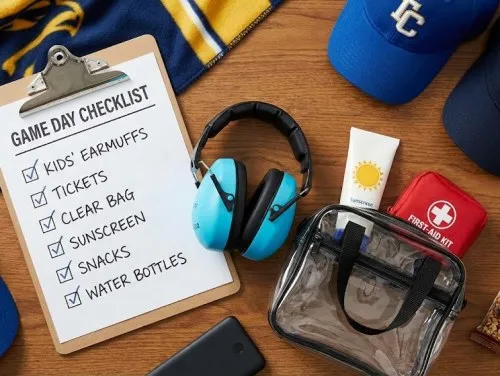
You don’t have to choose between sports memories and hearing safety.
With the right gear, the right fit, and a simple game-day plan, your child can enjoy the roar of the crowd—without taking home the damage.
If you want to explore kid-friendly hearing protection options designed for real-life comfort, you can also check out SafeMuff’s earmuffs built for babies, kids, and noise-sensitive families.

Usually under PA speakers, near drumlines/supporters’ sections, and in enclosed corners of indoor arenas where sound reverberates.
You want full cushion contact around the ear with no gaps—hair, hood seams, or hat edges can break the seal instantly.
Yes, but keep it thin and smooth. Thick seams and bulky hoods create leaks that reduce protection.
Put protection on before it starts, and step into the concourse during the loudest segments if possible.
Treat it as a warning sign: get to a quiet area, avoid more loud sound for 24–48 hours, and speak with a pediatrician/audiologist if it doesn’t resolve.


