
Dog hearing protection · Loud-event guide
Dog ear muffs for fireworks and thunderstorms: what to do before the noise starts
Fireworks and storms are hard because they are loud, sudden and impossible for a dog to understand. Ear muffs can lower the sharpest noise peaks, but they work best when your dog has met them before the event and has a calm indoor place to settle.

Yes, they can help — if the muffs fit, stay on and are introduced before the noise starts. Dog ear muffs reduce the sound trigger. They do not remove fear by themselves, so the best plan is ear protection, early practice and a safe indoor setup working together.
Why fireworks and thunder feel different to a dog
Fireworks are not just loud. They are sudden, uneven and often close to home. A dog cannot predict the next bang, and the flashes, smoke and people moving around the house can make the night feel even less safe.
Thunderstorms bring their own problems. The sound may be only one part of what your dog notices. Many dogs react to the weather changing, the flashes, the rain and the pressure of the whole event. Ear muffs help with the noise layer, not every part of the storm.
Do ear muffs help during fireworks or storms?
They help by lowering the loudest spikes reaching the ear. That can make a bang less sharp and give a dog a better chance to stay under control. It is not the same as silence, and it is not a cure for fear.
Fit and seal decide how much the muffs can do. The main guide explains whether dog ear muffs work; the noise-reduction science guide breaks down the cup, cushion and seal.
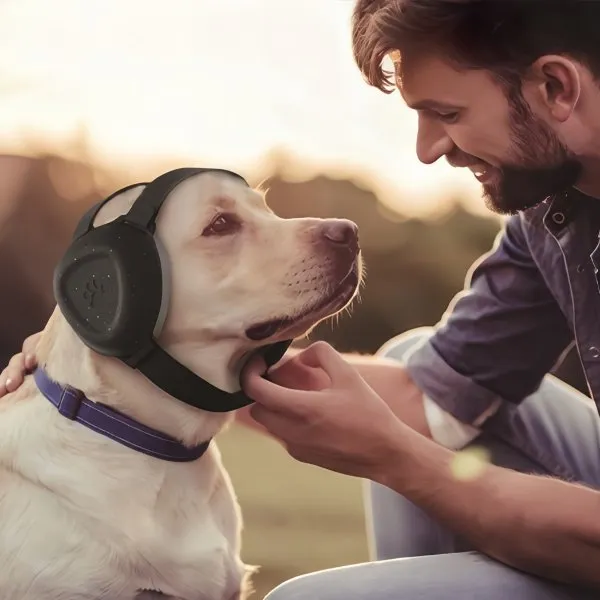
The 10-second fit check before the noise starts
For fireworks or thunder, keep the check simple: the cups cover the ears, the band stays stable, and your dog can move without losing the fit. Detailed model sizes sit with the SafeMuff dog earmuff range.
- The cups cover the ears. If the cup is sitting on fur or sliding behind the ear, sound leaks in.
- The band feels secure, not forced. A loose pair falls off; a tight pair gets pawed off.
- Your dog can move without losing the fit. Ask for a sit, a turn and a short walk before the noise begins.

Start 2 to 3 weeks before the event
Keep the first sessions boring and positive
First-time use on a loud night usually fails. The muffs feel strange, the dog is already stressed, and there is no time to build trust.
Let your dog sniff the muffs. Reward interest. Touch them to the head for a second, reward, then remove. Build from seconds to minutes while the house is calm.
Leave them out where your dog can investigate. Pair each calm sniff or touch with food or praise.
Put the muffs on for a few calm moments, then take them off before your dog gets annoyed. Stop while it is still easy.
Walk or play before dark. Feed before the noise is likely to start. Prepare the indoor space before your dog is already worried.
Do not wait for pacing, shaking or hiding. Once fear has taken over, even a familiar item can feel like one more problem.
What to do on the night
The goal is not to force your dog to be brave. The goal is to lower the noise, reduce visual triggers and make the house feel predictable.
Close windows and curtains, put on steady background sound, and bring your dog into a familiar indoor space before the event begins.
Keep the muffs on only if your dog accepts them. Stay calm, watch the fit, and do not scold fear.
Take them off and use the safe space instead. Forcing the muffs can make the next event harder.
Remove the muffs, check for rubbing, offer water, and let your dog decompress without extra pressure.
Build the room around more than the muffs
Ear muffs lower the sound trigger. The room does the rest: fewer flashes, fewer escape routes, and a place your dog already knows.
- Use a familiar hiding place. A covered crate, sofa corner or quiet interior room works better than a brand-new setup.
- Block the flashes. Closed curtains or blinds help reduce the sudden visual part of fireworks and lightning.
- Add steady background sound. A fan, TV or calm music can fill the gaps between bangs.
- Check ID before the season. Frightened dogs can bolt. Collar details and microchip information should be current before the night.

What the muffs won’t fix on the night
Ear muffs reduce noise. They do not treat anxiety, stop every storm trigger, or make a dog feel safe if the rest of the environment is chaotic. Some owners also use a snug wrap, calming support or a pheromone diffuser; those are aimed at settling, while muffs are aimed at sound.
Mistakes to avoid
- Waiting until the first bang. Put muffs on before the noise starts, not after your dog is already frightened.
- Using a loose pair. Loose muffs give a false sense of protection and usually end up on the floor.
- Leaving your dog alone in them. Ear muffs are for supervised use around loud events.
- Expecting silence. The aim is a lower peak, not a soundproof bubble.
Getting ready for fireworks season?
Start with a pair that fits, then practise before the noise arrives. SafeMuff supplies dog ear muffs for pet brands, retailers and seasonal stock planning.